The Name on the Note
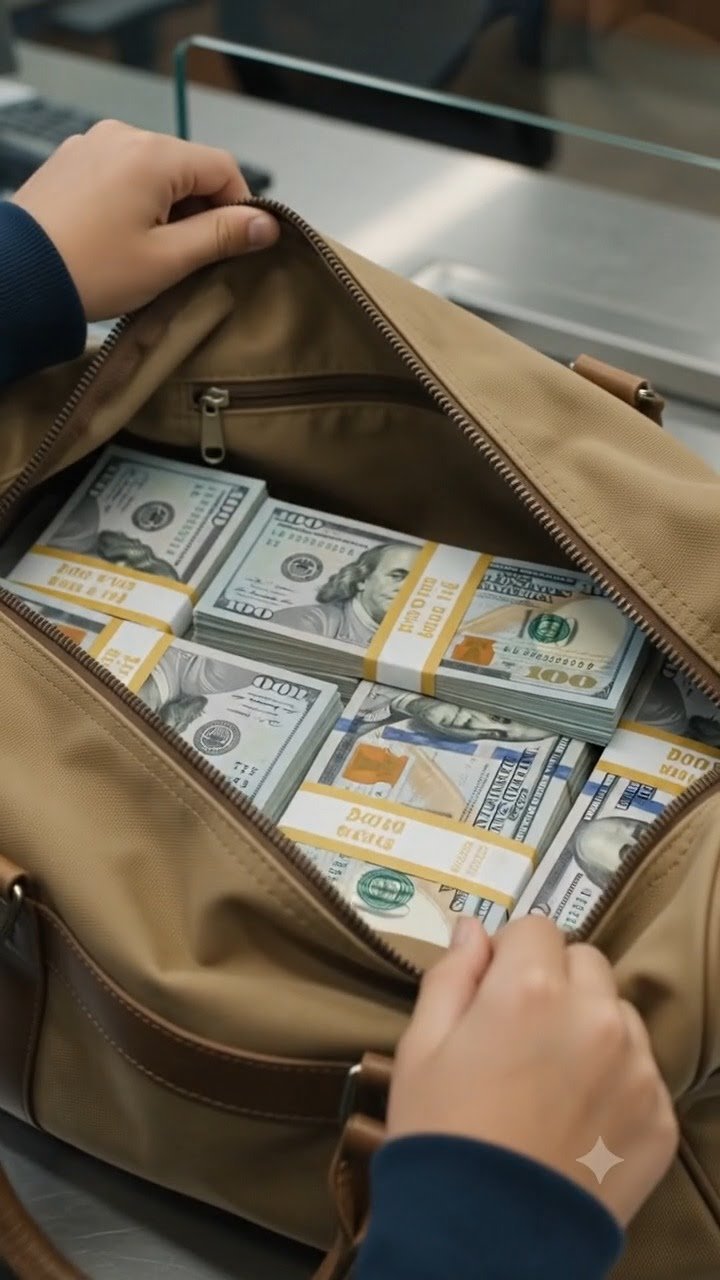
The teller didn’t move.
Her eyes stayed locked on the handwritten note like it was burning into her vision.
The boy stood still across the counter, hands resting lightly on the edge of the tan duffel bag, as if he was used to carrying things far heavier than money.
Around them, the bank had gone quiet in a way that didn’t feel natural.
Keyboards stopped mid-click.
A phone stopped ringing halfway through.
Even the air-conditioning hum seemed to fade into the background.
The teller swallowed hard.
“This… this can’t be right,” she whispered.
The boy tilted his head slightly. “Is something wrong?”
Her fingers trembled as she picked up the note again, reading the words a second time—slower now, like she was hoping they would change.
They didn’t.
Her face drained of color.
She looked up at him.
“Who gave this to you?” she asked, voice barely steady.
“My mom,” the boy said simply. “Before she left.”
A guard near the entrance shifted uncomfortably. Another step forward, unsure if this was still just a banking situation or something else entirely.
The teller slowly placed the note down.
And then she said a name.
Softly.

Carefully.
Like saying it louder might break something in the room.
“That’s… not possible.”
The boy blinked. “What’s not possible?”
The teller didn’t answer right away.
Instead, she reached under the counter and pulled out a drawer marked with old client files—records that hadn’t been touched in years.
Her hands moved fast now, searching.
Pages flipped.
Names passed.
Until she stopped.
Her breath caught again.
Right there.
A file.
Same name as the note.
Same signature style.
Same handwriting match.
Her voice cracked when she finally spoke.
“This account… was closed under a death report.”
Silence hit the lobby like a physical force.
The boy didn’t react immediately.

He just looked down at the duffel bag.
Then back at her.
“My mom said she would be gone for a while,” he said quietly. “But she also said… if I brought this here, you would help me find her.”
The teller’s hands shook harder now.
Because the system said one thing.
But the note in front of her said another.
And both couldn’t be true.
Behind her, the manager stepped out of his office, sensing the shift in the room.
“What’s going on?” he demanded.
The teller turned toward him slowly.
Her voice was almost a whisper.
“You need to see this.”
She held up the note.
And for the first time that day—
the bank stopped being a bank at all.
It became a sealed door to something everyone thought was already over.
But wasn’t.
Our Facebook Group
Join Our Group