PART 2: The Medal That Was Never Meant To Be Sold
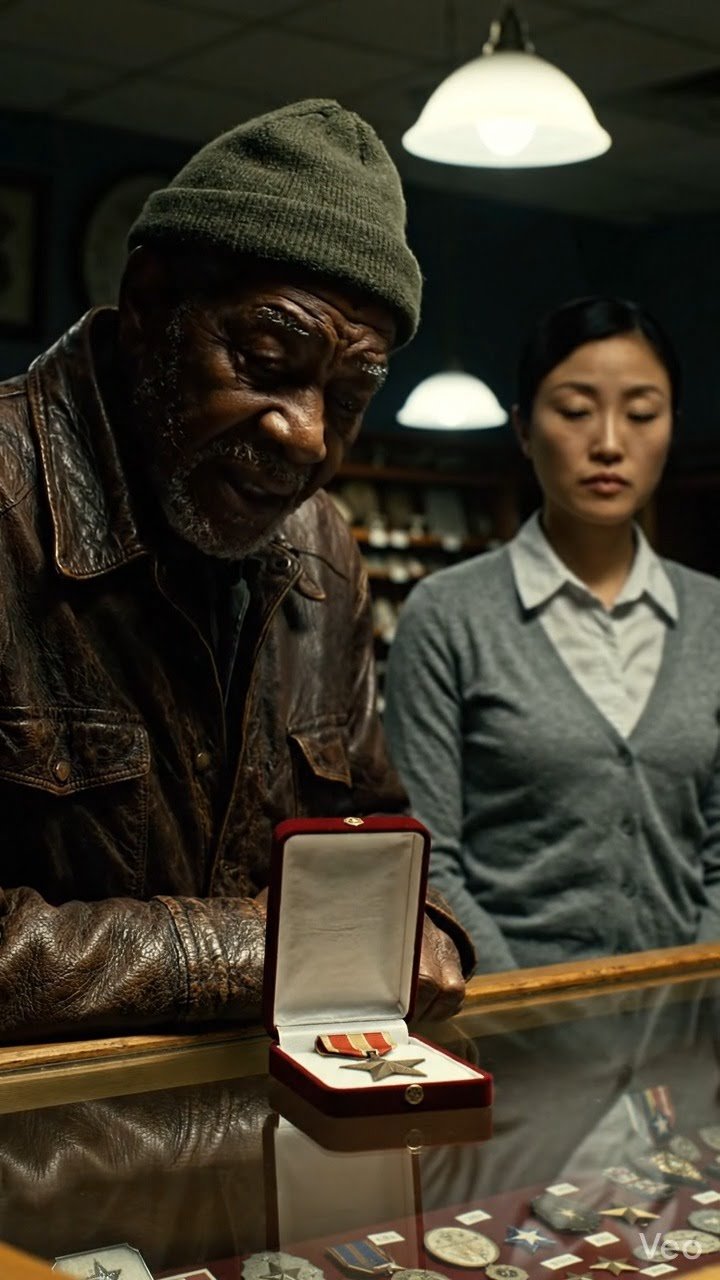
The old man stood on the pavement for a long moment, the medal resting in his palm again. It felt different now—heavier, not in weight, but in memory. The extra cash in his other hand no longer felt like relief. It felt like something uncertain.
He looked at the clerk.
“You didn’t have to follow me,” he said quietly.
The clerk shook her head. “Yes, I did.”
A brief silence passed between them as the street moved on without care—horns, footsteps, distant voices—life continuing as if nothing important had just shifted.
The old man slowly closed his fingers around the medal.
“I thought I had already let it go,” he admitted. “I thought surviving meant… letting go of things like this.”
The clerk studied him carefully.
“And does it?” she asked.
He didn’t answer right away.
Because the truth wasn’t simple.
It never was.
Finally, he exhaled. “It means I stopped remembering why I kept it in the first place.”
The clerk nodded slightly, as if that was the answer she expected.
“You didn’t keep it for money,” she said. “You kept it because it meant something when nothing else did.”
The old man looked down.
That hit deeper than he wanted it to.
For a moment, he saw flashes of another life—uniforms, standing straight, noise, purpose, people shouting his name not for pity, but respect.
Now, all of it felt far away.
“I don’t know how to carry it anymore,” he said honestly.
The clerk stepped a little closer.
“Then don’t carry it the same way,” she said. “Carry what it stood for.”
He frowned slightly. “And what was that?”
She didn’t hesitate.
“Value,” she said. “Not price.”
A pause followed.
The wind moved gently between them.
The old man finally slipped the medal back into his pocket again, but this time, his hand didn’t hesitate.
The clerk extended the cash once more.
“Take it,” she said softly. “Not as payment. As support.”
He looked at her, searching for something—judgment, expectation, anything.
But there was nothing like that.
Only understanding.
Slowly, he accepted it.
“Why are you doing this?” he asked quietly.
The clerk gave a small, calm smile.
“Because someone once told me,” she said, “that respect doesn’t end at a counter.”
That line stayed in the air longer than either of them spoke.
The old man nodded slowly.
For the first time, he didn’t feel like he had sold something.
He felt like he had been returned to himself.
He took a step back, then another.
Before turning away, he said softly, “You reminded me of something I forgot.”
The clerk tilted her head. “What’s that?”
He looked down at his pocket.
“That not everything valuable has a price,” he said.
And then he walked away.
Not as someone who had lost a medal.
But as someone who had found what it meant again.
Our Facebook Group
Join Our Group